
Why a Clean Roof Matters
Introduction
Leaves, branches, pine needles, and other debris may seem harmless, but leaving them on your roof for extended periods can trap moisture, damage roofing materials, and contribute to drainage problems.
What Kind of Debris Can Collect?
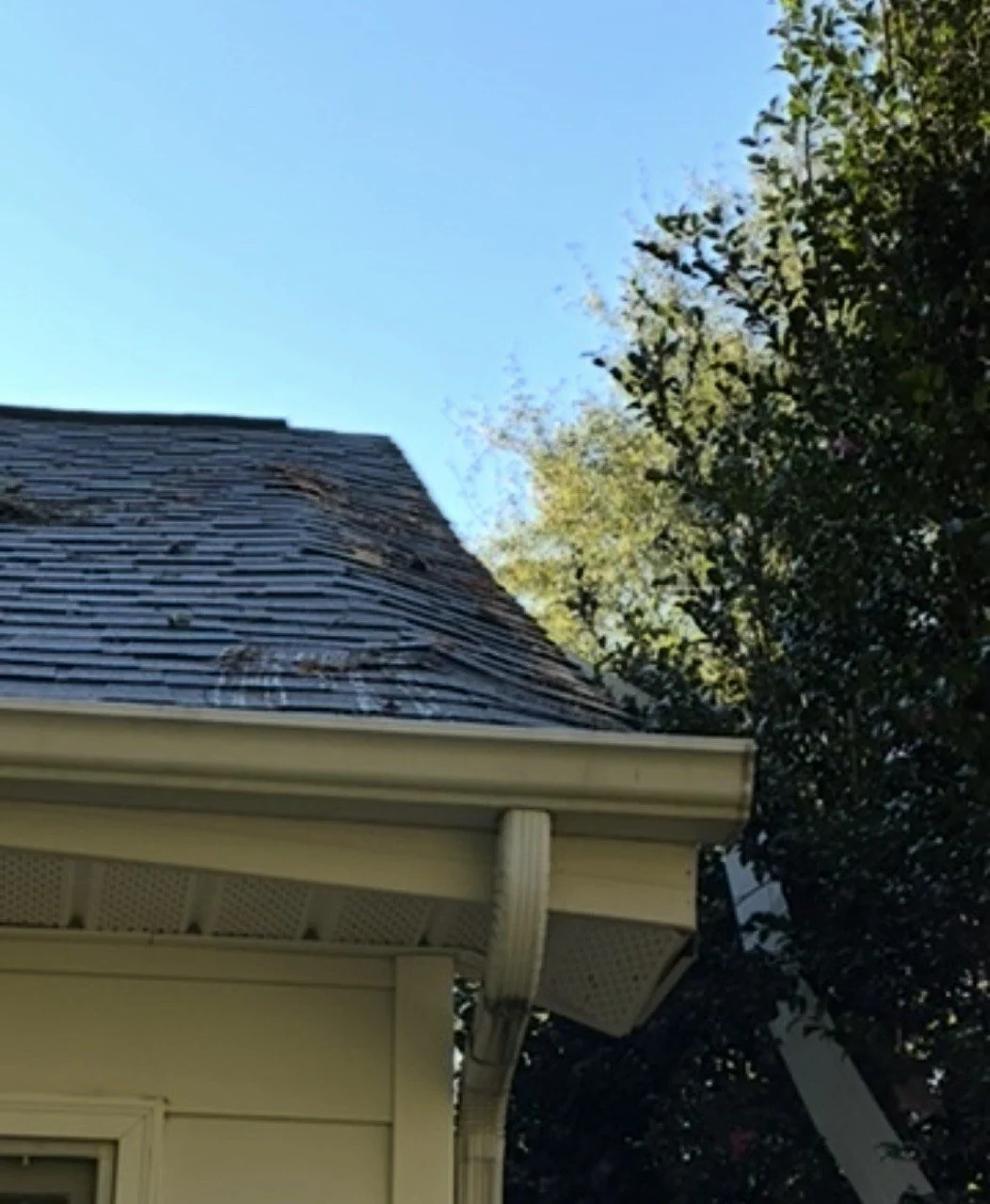
Roof damaged by tree.
Common roof debris includes:
Leaves
Small branches
Pine Needles
Dirt
Moss
Other Organic Material
Homes surrounded by trees may naturally accumulate more leaves, branches, and other debris, especially after storms.
Debris Can Trap Moisture
Leaves and organic material can hold water against the roof. Prolonged moisture can contribute to roof deterioration and create conditions for moss and algae growth.
Branches Can Cause Damage
Branches that hang over the roof can scratch, loosen, or damage shingles, especially during strong winds and severe weather.
Trees and larger limbs located too close to the home can pose an even greater risk during high winds, potentially damaging the roof, siding, gutters, and other areas of the property. At first, the damage may not be visible from the ground, but it can lead to leaks that become noticeable during the storms that follow.
For this reason, it is recommended to regularly trim back tree limbs that hang over your roof, especially dead, damaged, or weakened branches. If a tree is severely damaged, diseased, or positioned too close to the home, removing the tree completely may be the safest option.
Regular tree maintenance can help reduce the risk of storm-related damage, overall debris, and keep your home better protected year-round.
Debris Can Hide Existing Problems
Accumulated debris can cover damaged shingles, cracked flashing, deterioration, or signs of water intrusion. Keeping the roof clear makes it easier to spot potential problems.
Roof Debris Can End Up in Your Gutters
Leaves, pine needles, and other debris can easily make their way from your roof into your gutters and downspouts. When gutters become clogged, they may not be able to drain properly, causing water to overflow along the roofline and around the home’s exterior.
One of the most common issues we encounter with leaves and pine needles is clogged gutters. If left untreated, these blockages can contribute to water damage and potentially affect your roof, siding, fascia, and other areas of your home. What could have been a simple and easy fix can eventually turn into a much more costly repair.
Regularly cleaning your gutters and keeping them free of debris can help prevent clogs, improve drainage, and protect your home from unnecessary water damage.
That's why roof and gutter maintenance often go hand in hand.
Don't Forget About Safety
Cleaning a roof or gutters isn't always a safe DIY project. Wet, steep, or damaged roofs can be dangerous to walk on. If debris has accumulated heavily, consider having a professional handle the inspection and cleanup.
Conclusion
Keeping your roof clear of excessive debris can help protect roofing materials and make potential problems easier to identify. Regular tree maintenance and roof inspections, especially after storms, can help homeowners stay ahead of costly repairs.
Need a roof inspection after a storm? Don’t hesitate to call First Choice Constructors. We’re here to help protect your home and keep your roof in good shape.