

Exterior Parts every homeowner should know
Your home's exterior is made up of many important components, each designed to protect your home and work together as a complete system. Understanding parts like the soffit, fascia, flashing, ridge vent, pipe boots, drip edge, valleys, and J-channel can help you recognize potential issues, communicate more effectively with your contractor, and make informed decisions about repairs or replacements. This guide introduces some of the most important exterior components every homeowner should know.
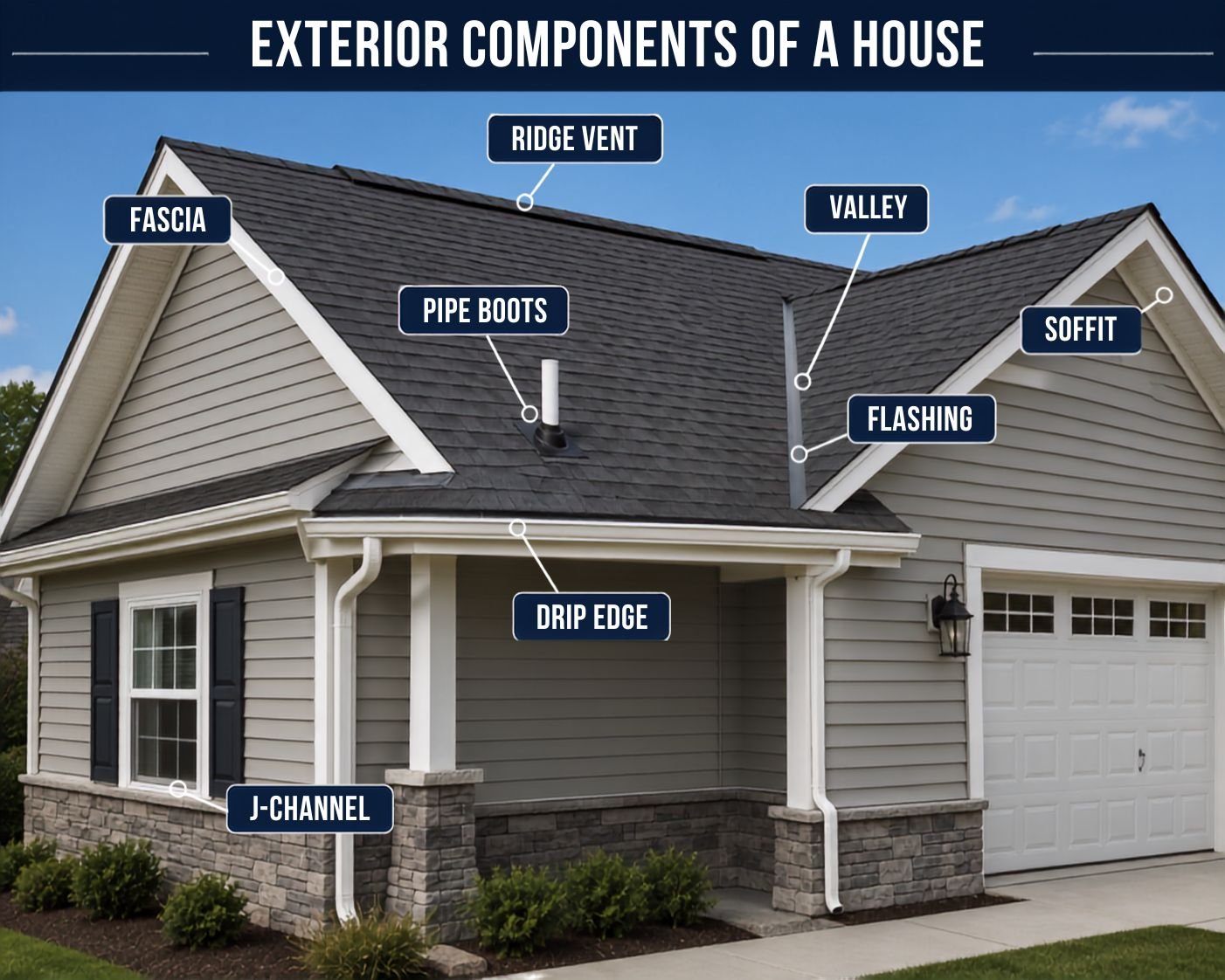
Exterior parts of a house that every homeowner should know.
Soffit
The soffit is located on the underside of the roof overhang.
Keeps moisture low and prevents bugs and animals from entering inside the home.
It protects the raw underside of the roof framing, offering a clean finished appearance to the exterior profile of a building.
Fascia
Located directly above the soffit, and it faces forward.
Vertical long, straight borders that runs along the lower edge of the roof.
Provides a secure surface for the gutters to be attached and it also supports the weight.
Ridge Vent
It is located in the top of the ridge of the sloped of the roof. Because it sits in the highest point of the roof. It allows warm air to naturally escapes from the attic.
Uses the natural "stack effect." As warm air rises and escapes through the ridge vent, cooler, fresh air is drawn in through the soffit vents, creating continuous attic ventilation.
It works without any electricity or having to move parts around making it a passive and silent solution.
Pipe bootS
Located where the vent pipe passes through the roof.
It is called by multiple names flashing or roof jacks
Prevents rain, snow, and debris from leaking in the home structures.
It can go up to 5 to 15 years depending on material type
Over time the rubber boot can crack from the exposure of the sunlight and weather.
Drip Edge
A thin strip of metal installed along the edges of your roof to direct rainwater away from the fascia and into the gutters, helping protect your home's exterior from water damage.
Prevents water from coming underneath the roof material or behind the gutters, which reduces the risk of rot, mold, and damages to the roof deck.
J-channel
Is located around the edge of the siding where the siding meets other material like, windows, doors, roofline, corners, and wall openings.
Is a narrow trim piece that appears to look like a J shape
It secures the edges of vinyl siding while creating a clean and finish touch.
Its direct rainwater away from the siding and behind the wall that will help protect the moisture damage.
Valley
Two slopes of the roof meet, it is located in the lower in the low point between the roof slopes and it is design to channel rainwater and melting snow into the gutters.
inspect regularly to make sure there is no leaves, branches, and other debris, if keep clean and good condition it will extend the life span.
Lined up with metal flashing or a special waterproof underlayment before shingles are installed.
Call to action
Understanding the key parts of your home’s exterior will help you make an informed decision about maintenance, repairs, and future improvements. If you are planning an exterior project or need any professional help with installation, our team is here to help. Give us a call at (864)266-0632! We are happy to answer your questions and provide expert service that you can always count on!