
Ice Storm Damage Prevention For Homeowners
How To Prepare Your Roof for a Winter Storm
Here’s some helpful tips for preventing damage to your roof!
Heat Cable
This will help melt ice buildup on top of the roof, which can cause damage to the roof, ceiling, and walls. Here are some important details to consider when installing a heat cable:
Clear the roof surface before installing cables.
Ensure you have (GFCI) outlet available to safely connect the cables.
Secure cables in zigzag patterns on top of the roof.
Focus on key placement areas such as roof valleys and edges, including the entire pipe length.
Running it to gutters and downspouts for drainage.
Secure it with clips or tape (whatever you have convenient)
Clips and tape have to be 12 inches.
Improving Insulation and Ventilation
Proper insulation and ventilation help prevent ice dams and other issues by keeping the roof surface uniformly cold. This reduces premature snowmelt, which can lead to ice buildup and water intrusion. To improve your insulation/ventilation, make sure to:
Use spray foam insulation or caulk (whatever is convenient for you) to seal gaps around electrical wiring, light fixtures, plumbing stacks, furnace flues, and chimneys. These openings allow the warm air to escape into the attic, so it can melt the snow unevenly on the roof and would likely contribute to an ice dams’ formation.
Have a fully installed attic helps maintain a consistent roof surface uniformly cold. This prevents snow from melting too quickly or freezing and refreezing at eaves, which is a common cause of ice dams.
Allow the cold air to go through soffit vents and let the warm air escape through the ridge vents or gable vent. This circulation helps keep the roof temperature balanced and lower the chances of ice buildup.
Check the insulation and ventilation systems from time to time to ensure they are working properly. Over time insulation can shift and vents can become blocked, reducing effectiveness and increasing risks of ice dams and damage to your roof.
Roof Rake
This tool allows you to safely remove snow from the roof with being on top of the roof, making the progress easier and safer. If you have a roof rake and are planning on using it, we recommend to:
Start with roof’s edges and work your way up to remove the snow from the most vulnerable areas.
Leave 2 to 3 inches of snow on the roof to avoid from being scratched or damaged by the metal or plastic blade of the tool.
Always stand clear of falling snow to avoid injury, take your time to clear small sections at a time with a careful technique.
Trim Trees
This is also important to remember to trim trees before and after ice storm because it can reduce the weight on the branches and keep down the overall load that the tree must support when coated with ice and snow. Proper pruning can prevent tree branch breakage and protect your property.
Clear Downspouts
Gutters play a huge role in your roof’s performance during winter weather. That being said, it’s very important to:
Clear downspouts to prevent frozen blockages and ensures a clear, free flowing drainage path, reduce the risk of overflow and heavy, damaged gutters.
Ensure gutters are cleared of leaves and debris before the storm, as it traps moisture from freezing temperatures and could cause damage.
Slowly pour hot water at the top of the downspout where the ice blockage starts, allowing it work its way down and it melts the ice.
Doing these steps and ensuring your gutters are clear help:
Protect the house from ice dams
Drain the excess water away from the house
Protect against leaks, mold and structural issues
Key Takeaways:
Before the Winter Storm DO:
Loosen or remove extra, weak or dead limbs so it lowers the overall load of the tree that will be bear coated with snow.
Clean out gutters to aid in better drainage.
Stock up on essentials: at least 3 days’ worth of food and few gallons of water.
Have a backup heat source such as generators, wood stove, or space heater (whatever is most convenient for you.)
Gather flashlights, extra batteries, or candles in case of a power outage.
Have a first-aid kit and necessary medication.
Collect extra blankets and warm clothing if power is out.
Consider if your house has drafts- If it does, then you may need to consider sealing open gaps or installing more attic insulation depending on the cause. Sealing the gaps help keep out water, wind, lower structural damage, and minimize heat loss. Here’s a list of important areas to seal before an ice storm:
Attic
Roof Line
Chimneys
Plumbing Vents
Windows
Doors
Baseboard (space between floors and walls.)
After the Winter Storm DO:
Wait until the ice melts, as it allows you to have a clear assess to the full extent of the damage.
Watch out for falling ice dams, especially if you have metal roofs- they fall at random and could be potentially fatal.
Use Caution when walking and assessing your property if ice/snow is still present.
Signs Your Roof Isn’t Ready for Winter Weather
Missing or damaged shingles
A lot of leaking and water damage
Damaged flashing or sealants
Shingle granule loss found in gutters
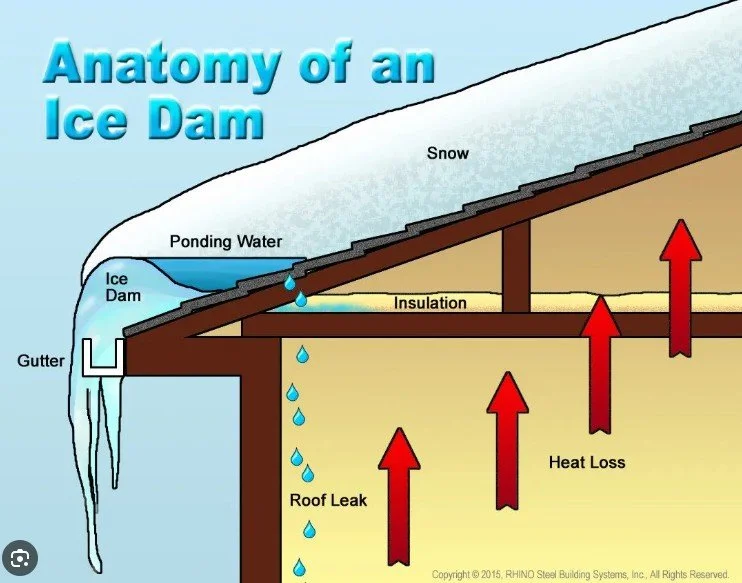
Ice Dams: What They are, Why They’re Dangerous and How to Prevent Them.
What are Ice Dams?
They appear when the heat from inside the house escapes into the attic and warms the roof that causes the snow to melt underneath, The melted snow will eventually flow towards the roof edges. Where the temperature is lower and refreezes. Over time it will build up which trap ice water, that could lead to roof leak and damage.
The ice of ridges that forms on the edge of the roof
They prevent melting snow that melting the snow from properly off the roof.
Moisture that enters the house from ice dam can lead to growth of mold and mildew inside the house.
Common Winter Roofing Mistakes
Trying to break off ice with a sharp tool, that can lead to crack shingles or puncture the roof.
Not cleaning gutters before winter, this traps water and it freezes it and worsen ice dams.
Skipping attic insulation and ventilation checks, heat loosens from the house accelerates snowmelts.
Is Your Roof Winter-Ready?
Are your shingles broken or cracked?
Are your gutters clean?
Are your chimneys, vent, and skylight properly sealed?
Have you trimmed overhanging branches?
Why Small Roof Issues Become Big Problem in Winter?
Even small roof issues can lead to big problems. Melted snow can seep into the tiniest cracks causing leaks that may damage your home’s interior, which can create visible stains and, if left unaddressed, it can lead to serious problems. Therefore, try to get existing small roof issues repaired before the storm. If you can’t, then try out some the tips to help prevent the issue from getting worse. Also, installing a temporary tarp could help if you know where the leak is coming from.